Is a hand-tooled leather belt worth the price? | Updated September 28, 2026 | 9 min read | Ya Qalbi Editorial Team
Is a hand-tooled leather belt worth the price? For most fashion-forward professionals and frequent travelers, the answer is yes. A genuine hand-tooled leather belt justifies its premium through superior full-grain or vegetable-tanned materials, artisan labor that machines cannot replicate, and a lifespan that often stretches past a decade compared to two to three years for mass-produced alternatives. A hand-tooled leather belt is a premium accessory where detailed patterns are manually carved into natural leather hides by skilled artisans using specialized hand tools. This 2026 guide breaks down exactly where the money goes, how to separate authentic craftsmanship from marketing spin, and when a handcrafted leather belt investment genuinely pays off for an Indian buyer.
India's appetite for premium leather is accelerating rapidly. The India leather goods market is projected to grow at a 4.6% CAGR through 2033, with demand for premium and luxury leather goods rising as consumers prioritize high-quality craftsmanship, exclusivity, and brand recognition. That market shift matters for anyone weighing whether a hand-tooled leather belt value proposition holds up against a cheaper, factory-stamped alternative sitting right next to it on the retail shelf.
A belt is the one accessory a professional touches every single day, yet it is the one most people buy on impulse. The irony is that the piece worn most often is usually the one bought with the least thought.
Is a Hand-Tooled Leather Belt Worth the Price for Indian Professionals?
For style-conscious professionals in India, a hand-tooled leather belt is worth the price when it replaces multiple cheap belts over its lifespan, elevates formal and travel wardrobes consistently, and holds resale or heirloom value that synthetic alternatives never achieve. The real question isn't whether the belt costs more upfront; it's whether the long-term cost-per-wear and cost-per-year math favors the investment.
Where the Value Actually Shows Up
- Material integrity: Genuine full-grain or vegetable-tanned leather ages into a rich patina rather than cracking, while synthetic alternatives crack, peel, and develop permanent wrinkles within 2 to 3 years.
- Structural durability: Premium handmade leather belt construction is documented to last 10 to 15 years with proper care, with some owners reporting 20-plus years of use.
- Individuality: No two hand-carved patterns are identical, giving each belt a one-of-a-kind character that machine embossing cannot replicate.
- Wardrobe versatility: A well-tooled belt in neutral tones bridges formal Indian office wear, festive occasions, and international travel without looking dated.
| Factor | Hand-Tooled Leather Belt | Mass-Market / Synthetic Belt |
|---|---|---|
| Average lifespan | 10 to 15+ years | 2 to 3 years |
| Material | Full-grain or vegetable-tanned leather | Bonded, PU, or synthetic leather |
| Craftsmanship | Individually hand-carved by artisans | Machine-stamped or rolled patterns |
| Aging behavior | Develops patina, improves with age | Cracks, peels, loses shape |
| Uniqueness | One-of-a-kind design per piece | Identical mass-produced units |
Key Takeaway: A hand-tooled leather belt earns its price through material quality, durability that compounds over a decade or more, and a design uniqueness no factory line can reproduce. But understanding what makes a belt genuinely hand-tooled, rather than simply labeled that way, is where the real insight begins.
What Makes a Belt Genuinely "Hand-Tooled" and Not Just "Tooled-Look"?
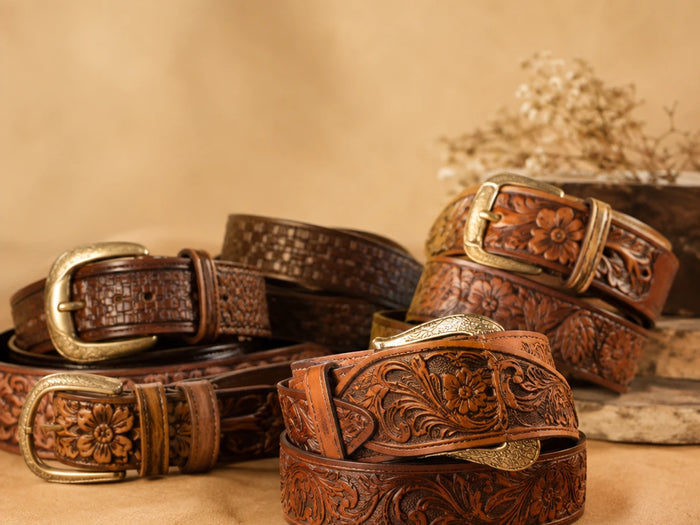
A genuinely hand-tooled belt is carved by an artisan using a swivel knife, bevelers, and stamping tools directly on dampened leather, whereas most "tooled-look" belts are machine-embossed using steel rollers and pre-fabricated patterns. Leather tooling is a traditional artisan craft where dampened natural hides are shaped manually to produce three-dimensional motifs. Understanding this distinction is the single most important skill for anyone evaluating handcrafted leather belt value in the Indian market.
The Real Artisan Process
Authentic tooling begins with casing, where water is applied to expand the leather fibers, making them ideal for knife carving. From there, artisans hand-cut edge borders, transfer the pattern, and carve it in with a swivel knife before finishing. A single complex floral pattern can require well over six hours to complete. This extensive manual labor explains why any complicated floral pattern priced unusually low is almost always machine-made, not hand-carved.
Reading the Signals
- Design becomes part of the material: Genuine tooling reshapes the leather fibers themselves rather than sitting on the surface, which is why a well-tooled belt can outlast the person who made it.
- Tanning method matters: Vegetable-tanned leather takes tooling beautifully, while chrome-tanned leather resists it almost entirely due to chemical processing.
- Irregularities are a good sign: Slight asymmetry in stamp depth or pattern spacing signals human handiwork over hydraulic presses.
- Price-to-labor ratio: A belt with intricate hand-carved florals or motifs priced near a mass-market range is a red flag for authenticity.
Tooled belts require individual artistry, commanding higher prices but delivering superior craftsmanship and distinctive appearance, a distinction the difference between tooled and embossed leather makes clear.
Key Takeaway: True hand-tooling is a labor-intensive, time-consuming craft; if the price doesn't reflect hours of skilled hand-carving, the belt is likely machine-embossed rather than genuinely handcrafted. This understanding sets the stage for knowing exactly what you're paying for when you choose a premium belt.
What Are You Actually Paying For in a Hand-Tooled Leather Belt?
The price of a hand-tooled leather belt covers raw material sourcing, hours of skilled artisan labor, finishing processes, and design exclusivity, not just the leather hide itself. Breaking down the cost structure helps Indian buyers see why artisanal leather accessories command a legitimate multiple over department-store belts.
The Cost Components
- Raw hide selection: Full-grain and vegetable-tanned hides are graded and hand-selected for grain consistency, a quality control step skipped entirely in synthetic or bonded leather production.
- Skilled labor hours: A single hand-tooled belt can involve multiple stages including casing, edge-cutting, pattern transfer, carving, drying, and finishing, with detailed patterns taking over six hours from start to finish.
- Tool and technique investment: Artisans rely on swivel knives, bevelers, and stamping tools refined over years of practice to achieve consistent, dimensional carving.
- Finishing and hardware: Edge burnishing, natural dyeing, and solid brass or stainless buckle hardware add both cost and structural longevity to the final piece.
- Design exclusivity: Limited-run or made-to-order patterns mean you are paying for artisanal scarcity as much as raw material.
| Cost Driver | Hand-Tooled Belt | Machine-Made Belt |
|---|---|---|
| Labor time per unit | Several hours of manual carving | Minutes on an automated line |
| Leather grade | Full-grain or vegetable-tanned | Split leather, bonded, or synthetic |
| Pattern origin | Individually carved, often unique | Repeated stamp or roller pattern |
| Finishing | Hand-burnished edges, natural dyes | Sprayed coatings, machine edging |
This commitment to pure materials is precisely the philosophy behind Ya Qalbi, a contemporary luxury brand built on the belief that authentic materials and meticulous attention to detail should define an accessory, not a loud logo. Every Ya Qalbi piece uses pure materials and natural textures to create a distinctive statement, positioning the brand's leather bags and accessories as a genuine alternative to mass-produced fashion for buyers who value individuality over volume. When you understand these cost components, the question shifts from "Why is this so expensive?" to "How is this priced so reasonably given the inputs?"
Key Takeaway: The premium on a hand-tooled belt reflects real inputs: hand-selected leather, hours of documented artisan labor, and finishing techniques that machines cannot replicate at scale.
How Does Cost-Per-Wear Compare to Buying Cheaper Belts Repeatedly in India?
Cost-per-wear analysis shows that a single durable hand-tooled leather belt often works out cheaper over a decade than replacing budget belts every two to three years, even before accounting for the visible quality difference. Cost-per-wear is a financial metric calculated by dividing the purchase price of an item by the total number of times it is worn over its lifespan. This metric matters most for frequent travelers and professionals who wear a formal belt daily across meetings, flights, and events.
A Simple Ten-Year Comparison
Assume a mass-market belt needs replacing roughly every two to three years due to cracking and wear, as standard belts typically deteriorate within 2 to 3 years. Over a ten-year period, that could mean three to five replacement purchases, each carrying shipping, sizing hassle, and the risk of a mismatched buckle. A hand-tooled belt built on full-grain or vegetable-tanned leather, by contrast, is designed to be worn for a decade or more, with quality pieces lasting 10 to 15 years and sometimes beyond 20 years with proper care.
Factors That Extend or Shorten Lifespan
- Climate conditioning: India's tropical climate means leather needs periodic conditioning to prevent drying, a simple maintenance habit that pays off over years of use.
- Rotation habits: Owning two or three quality belts and rotating them reduces daily mechanical stress on the leather fibers and buckle hardware.
- Storage practices: Hanging or flat-storing a belt away from direct sunlight prevents fading and structural fiber breakdown.
- Hardware durability: Solid brass or stainless steel hardware resists corrosion and breakage far longer than plated alloy buckles common in budget belts.
Key Takeaway: When measured over a decade, one well-made hand-tooled belt frequently costs less per year of use than repeatedly replacing cheaper alternatives, while looking sharper the entire time. This is where the decision becomes less about luxury and more about practical value.
How Should Style-Conscious Buyers in India Choose a Hand-Tooled Leather Belt?
Choosing a hand-tooled leather belt in India comes down to verifying material authenticity, matching design to wardrobe versatility, and buying from a maker whose craftsmanship philosophy is transparent about sourcing and process. With India's premium leather segment expanding as the premium tier climbs at a 7.31% CAGR between 2026 and 2031 even as mass products still hold the bulk of the market, buyer discernment matters more than ever.
A Practical Buying Checklist
- Verify the leather type: Ask specifically whether the belt uses full-grain or vegetable-tanned leather rather than bonded or corrected-grain material, since tanning method determines both how it ages and how well it holds hand-carved detail.
- Inspect for hand-carving evidence: Look closely for slight asymmetries in stamp depth and pattern flow; perfectly uniform repetition usually signals a machine roller press.
- Prioritize versatile designs: Subtle tooling in neutral browns or black works across formal Indian workwear, festive wear, and international travel, unlike overly loud patterns suited to a single occasion.
- Check hardware and stitching: Solid metal buckles and reinforced stitching at high-stress points indicate a maker who invested in true structural durability.
- Choose transparent brands: Select makers who clearly explain their hide sourcing and crafting process, backing their brand language with documented material choices.
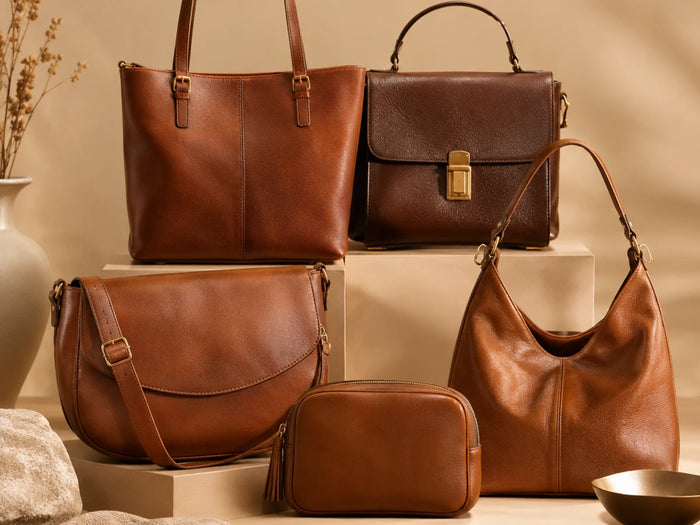
This standard of craftsmanship is where Ya Qalbi positions itself for the modern Indian buyer: offering a curated collection of leather bags, totes, and accessories designed to elevate every journey, from daily office commutes to international transit. The brand's core point of view, that individuality and authentic natural materials matter more than mass production, represents the exact benchmark a discerning belt buyer should apply before checkout.
Key Takeaway: The smartest hand-tooled leather belt purchase in India combines verified material authenticity, a versatile design, and a maker transparent enough to explain exactly what you're paying for. For related guidance, see How To Choose A Leather Laptop Backpack That Fits Your Laptop Size 2026 Step By Step Guide 2026.
Conclusion
Is a hand-tooled leather belt worth the price? For most fashion-forward Indian professionals and travelers, the answer is yes, provided the belt is genuinely hand-carved on full-grain leather rather than machine-embossed and mislabeled. The long-term math strongly favors quality: fewer replacements, a decade or more of daily wear, and a natural material that ages into character rather than decay.
- Material is non-negotiable: Full-grain or vegetable-tanned leather is the essential baseline for any belt claiming authentic hand-tooled value.
- Labor justifies price: Genuine hand-carving takes several hours per piece, unlike machine-rolled patterns produced in seconds.
- Longevity beats cheap repetition: A decade-plus lifespan usually outperforms the cumulative cost of replacing budget belts every two years.
- Authenticity checks matter: Inspect closely for hand-carving irregularities and confirm the exact tanning method before purchase.
- Brand transparency is a signal: Makers like Ya Qalbi that clearly explain craftsmanship and sourcing tend to deliver genuine value on the premium they charge.
The next step is simple: before your next purchase, apply the checklist above, ask the maker direct questions about tanning and carving processes, and weigh the ten-year cost against a budget belt you would likely replace three times over.
FAQ
Is a Hand-Tooled Leather Belt Worth the Price? 2026 Guide?
Yes, in most cases a genuinely hand-tooled leather belt is worth the price because it uses full-grain or vegetable-tanned leather that ages into a rich patina rather than cracking, involves hours of documented artisan labor per piece, and typically lasts 10 to 15 years or longer compared to 2 to 3 years for mass-market alternatives. A hand-tooled leather belt is a custom accessory where detailed patterns are manually carved into natural leather hides by skilled artisans using hand tools. The long-term value depends on verifying authenticity, since many "tooled-look" belts are actually machine-embossed and priced near premium without delivering equal durability. When calculated over a decade, the lower cost-per-wear makes a handcrafted leather belt a smart investment for discerning buyers.
What is the difference between a hand-tooled belt and a machine-embossed belt?
A hand-tooled belt is carved by an artisan using a swivel knife and stamping tools directly into dampened leather, while a machine-embossed belt uses steel rollers and pre-fabricated stamp patterns to mimic the appearance at a fraction of the time and labor cost.
How long does a genuine hand-tooled leather belt last?
With proper care, premium hand-tooled leather belts are documented to last 10 to 15 years, with some owners reporting 20-plus years of use, far outperforming synthetic belts that deteriorate within two to three years.
How can I tell if a belt is really hand-tooled and not just marketed that way?
Look for slight structural irregularities in stamp depth and pattern spacing, ask directly whether the hide is full-grain or vegetable-tanned, and be skeptical of complex carved patterns priced far below what several hours of skilled artisan labor would cost.
Is vegetable-tanned leather better than chrome-tanned leather for a tooled belt?
Yes, vegetable-tanned leather takes hand-tooling far better than chrome-tanned leather, which resists deep carving almost entirely due to chemical processing, making vegetable tanning the gold standard for genuine tooled work.
Why do premium leather accessories cost so much more than department-store belts?
Premium leather accessories carry costs for hand-selected full-grain hides, hours of skilled artisan labor, hand-burnished finishing, and limited-run design exclusivity, none of which exist in automated mass production lines.
Are hand-tooled leather belts a good investment for frequent travelers in India?
Yes, frequent travelers benefit from a hand-tooled belt's structural durability and versatility across formal, festive, and international settings, since a single well-made piece replaces multiple lower-quality belts over a decade of continuous use.
Does buying from an artisan-focused brand like Ya Qalbi make a difference?
Brands built on artisan craftsmanship and authentic materials, such as Ya Qalbi, tend to be transparent about sourcing and construction, helping buyers verify that the premium paid reflects real hand-tooled value rather than surface marketing language.
This article was compiled using publicly available industry research, market reports, and craftsmanship process documentation current as of September 2026. Pricing, lifespan, and market figures cited are drawn from third-party industry sources and may vary by product, maker, and region; readers should verify specific claims with individual sellers before purchase.